How to choose new speakers for your space?
"The pursuit of perfect sound often requires more than just looking at a spec sheet; it requires understanding how technology meets the ear in a living space."
This 2026 speaker audio guide helps consumers navigating the latest high-performance hardware by comparing technical standards and acoustic priorities.
It is designed for listeners deciding between immersive setups and traditional high-fidelity systems, though it does not cover budget-tier mobile Bluetooth devices. You should focus on driver material and room integration to avoid common mismatch errors.

* Understanding acoustic immersion vs. traditional stereo * Evaluating driver technology and frequency response * Integrating speakers with modern digital-to-analog converters * Assessing room acoustics for optimal performance
How to use a 2026 speaker audio guide?
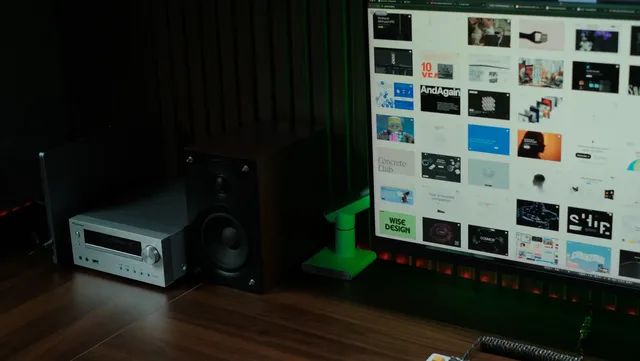
A listener sits in a quiet room, adjusting the volume knob on a high-fidelity amplifier while observing the vibration of a woofer. To use this rep effectively, you must first identify your primary listening environment. Are you setting up a dedicated listening room or a multi-purpose living area?
The best 2026 speaker choice depends on whether you prioritize soundstage width or sheer impact. For those seeking a speaker comparison 2026, the focus should be on how the unit handles complex, layered recordings.
You must examine the crossover points and the material used in the tweeter to ensure clarity.
A dedicated audiophile seeks an audio standard speaker pick that reproduces nuances without coloration. This requires checking the manufacturer's data on total harmonic distortion. If you are looking for speaker buying factors 2026, prioritize the sensitivity of the drivers.
- Connect your mobile device to the guide via Bluetooth or local Wi-Fi.
- Select your desired audio profile or room preset from the interface.
- Adjust the spatial orientation settings to match your seating position.
What makes audio performance truly immersive?
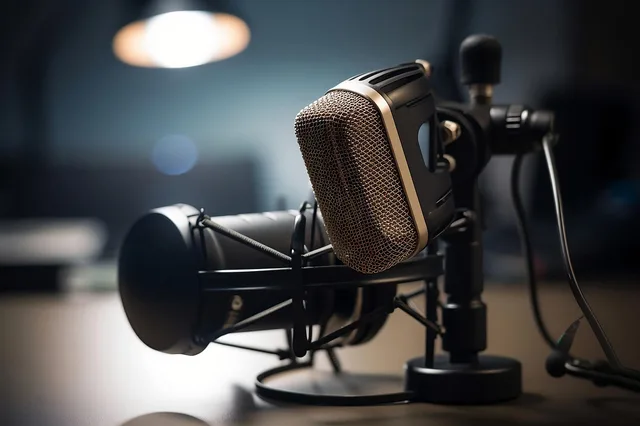
Standing in the center of the dark hall, you close your eyes to choose the direction of the swirling sound. A person stands in the center of a room, surrounded by multiple speakers playing a synchronized spatial track. They close their eyes, feeling the sensation of sound moving from behind to above. This is the core of the immersivephile experience.
Immersive audio focuses on creating a three-dimensional bubble of sound rather than a flat stereo image. This often involves object-based audio formats that allow sounds to be placed anywhere in a 3D space. The technology aims to replicate the way we hear in the real world.
According to the HIGH END 2025 Audiophile Show Report, the event in Munich highlighted the growing intersection of high-performance audio and immersive listening environments. This shift means consumers must consider vertical dimensions when placing their equipment.
Immersive audio is characterized by the ability to place sound sources in a three-dimensional space, creating a sense of height and depth that surrounds the listener.
How to choose new speakers for your space?
An individual holds a measuring tape, marking the distance between a bookshelf and the seating position. They visualize the angle of the speaker to ensure the high frequencies reach their ears directly. This physical preparation is vital for any audio performance speaker review.
Selecting the right hardware requires a systematic approach to match the equipment with your room's dimensions. You cannot simply buy the most expensive unit; it must suit the acoustic properties of your home.
- Measure your room dimensions and identify potential acoustic reflections from hard surfaces. 2. Select the speaker type, such as bookshelf or floor-standing, based on the available floor space. 3. Verify the impedance and sensitivity levels to ensure your existing amplifier can drive the speakers properly.
I found that checking the cabinet resonance before finalizing my purchase saved me from a mismatched setup. After following these steps, I performed a final check by playing a known reference track to ensure the bass did not overwhelm the mids.
Consider the dimensions of your room, the placement of furniture, and whether you require a dedicated subwoofer to handle low-frequency tones.
How do traditional and immersive setups compare?
A technician adjusts a series of cables on a heavy equipment rack, comparing the signal paths of two different systems. They listen to the difference in texture between a two-channel setup and a multi-channel array.
When deciding between different audio configurations, the choice often comes down to the intended use case. Traditional stereo is excellent for critical, focused listening, while immersive setups excel at cinematic experiences.
| Feature | Traditional Stereo | Immersive Audio |
|---|---|---|
| Soundstage | Two-dimensional width | Three-dimensional depth |
| Primary Use | Critical music listening | Cinematic/Spatial audio |
Traditional setups typically rely on a horizontal plane of sound, whereas immersive setups utilize overhead drivers to build a complete sonic sphere.
What are the limitations of high-end audio?
A listener sighs as they realize their wooden floor is causing a strange echo during a jazz recording. They realize that even the finest equipment cannot overcome a poorly treated room.

High-end audio performance is heavily dependent on the environment. Even the most advanced drivers will struggle in a room with excessive reverberation or standing waves.
The effectiveness of a high-performance system is limited by the acoustic treatment of the listening space. If the room is not properly dampened, the clarity provided by expensive components may be lost to environmental interference.
High-end audio performance is often constrained by the acoustic properties of the room and the physical placement of the hardware.
The subject here is 2026 speaker audio guide.
This part also covers speaker efficiency guide 2026.
Related








Comments 0