How to check fridge power use efficiently?
"How much energy will this appliance pull from the wall every single day?"
Checking the 2026 fridge power use involves understanding temperature settings, compartment balance, and efficient design features. This guide helps you navigate energy consumption by comparing cooling requirements and storage safety.
You will learn about thermal efficiency, the relationship between freezer and refrigerator compartments, and the importance of optimal temperature ranges.
How to check fridge power use efficiently?

Walking through a showroom, I noticed how the bright lights of open display cases often distract from the actual energy labels on the side of the units. To begin a 2026 fridge power use check, one must look beyond the aesthetic and focus on the thermal management systems.
Efficiency is often dictated by how well a unit retains its cooling. According to Wikipedia, doors made of glass to allow inspection of contents improve efficiency significantly over open display cases, which use 1.3 times the energy.
When evaluating a new unit, checking the seal integrity and the presence of insulated glass can reveal how much energy is lost through constant heat exchange.
A low power kitchen appliance often relies on stable temperature management to prevent the compressor from running constantly. If a unit has poor insulation, the motor must work harder to maintain the set point.
Understanding these basic physics helps in selecting a more sustainable appliance for a modern kitchen.
- Plug a kilowatt-hour meter into the wall outlet.
- Connect the refrigerator to the meter.
- Monitor the energy consumption over a full twenty-four-hour period.
What is the best energy fridge 2026 for food safety? 2026 fridge power use check
Standing in front of a massive French-door unit, I wondered if the massive size would inevitably lead to higher electricity bills regardless of the technology inside. Selecting the best energy fridge 2026 requires balancing large capacity with the energy needed to maintain safe food temperatures.
Energy consumption is directly tied to the temperature settings required for different food types. For perishable items, the optimal temperature range is 3 to 5 °C (37 to 41 °F).
Maintaining this specific range is critical for food longevity and prevents the unit from overworking to reach much lower, unnecessary temperatures.
When comparing fridge power use, it is vital to consider the freezer requirements as well. Food stored at or below −18 °C (0 °F) is safe indefinitely. Choosing a unit that can maintain this temperature without excessive energy draw is a key component of a new energy rating evaluation.
In this sequence, the second step is the most extensive.
Why does freezer temperature affect the whole unit?
As I opened the heavy freezer door at midnight, I paused to check the frost buildup while the biting cold air hit my face.
Opening the freezer door of a dual-compartment unit, I felt the rush of cold air and realized how much the two sections interact. A common question when looking at a new fridge energy rating is why the freezer settings seem to dictate the overall efficiency of the refrigerator.
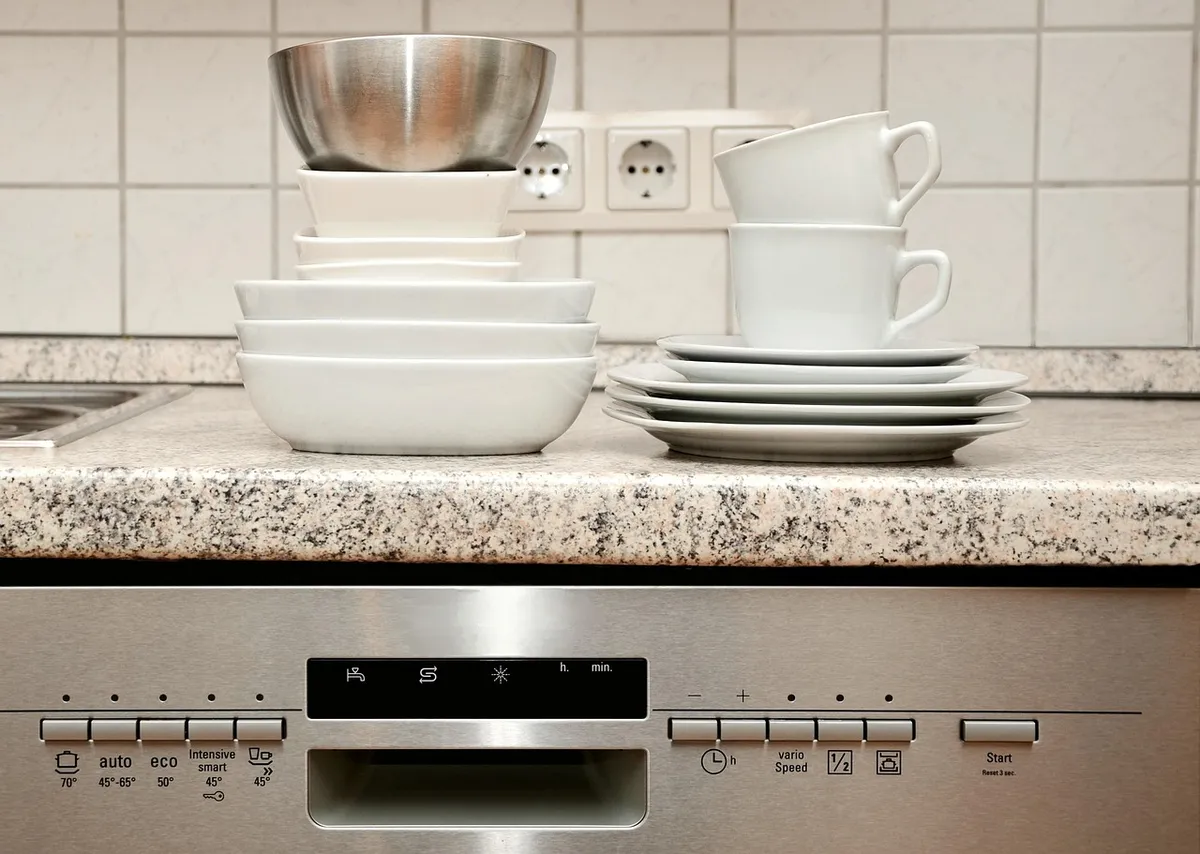
The relationship between the two compartments is a fundamental design constraint in most household models. Most household freezers maintain temperatures from −23 to −18 °C (−9 to 0 °F).
Because many units use a single coolant loop to serve both the freezer and the refrigerator, the settings are interdependent.
| Feature | Temperature Range | Primary Purpose |
|---|---|---|
| Refrigerator Compartment | 3 to 5 °C (37 to 41 °F) | Perishable food storage |
| Household Freezer | −23 to −18 °C (−9 to 0 °F) | Long-term frozen storage |
Refrigerator freezers generally do not achieve lower than −23 °C (−9 °F) because the same coolant loop serves both compartments. Lowering the freezer compartment temperature excessively causes difficulties in maintaining the above-freezing temperature in the refrigerator compartment.
This interaction means that setting the freezer too low can actually lead to inefficient temperature swings in the fresh food area.
How to manage cooling cycles for better efficiency?
Placing a large bag of frozen vegetables into the freezer, I thought about how sudden temperature changes might trigger a heavy power draw. Managing the thermal load is an essential part of maintaining a low power kitchen appliance.
To maintain efficiency, follow these steps for managing temperature changes:
- Avoid adding large amounts of warm or unfrozen food all at once to prevent sudden temperature spikes. 2. Use specific features designed for rapid cooling several hours before adding more than 1 kg of unfrozen food to the freezer. 3. Monitor the refrigerator compartment to ensure it stays within the 3 to 5 °C range when the freezer is set to its lowest levels.
I once tried to freeze a large batch of soup in one go, and the sudden drop in temperature caused the entire unit to run loudly for hours. This experience highlights why gradual cooling is better.
A final check of the seals and the thermostat settings after adding food can ensure the unit returns to its steady state quickly.
What are the limitations of standard household cooling?
Looking at professional laboratory equipment, the difference in cooling power compared to a home kitchen is staggering. Understanding these limits helps clarify why household appliances have specific energy-saving constraints.
According to Johns Hopkins University, there is a historical context regarding refrigerators and food preservation in foreign countries.
Standard household units are not designed for the extreme temperatures found in specialized environments. While some freezer-only units can achieve −34 °C (−29 °F) and lower, typical household models are limited by their shared cooling loops.
This prevents them from reaching the "ultra-cold" levels used in biological science.
For example, ultra-low temperature freezers used for biological samples typically reach −80 or −86 °C. These specialized units often use two stages of cooling in a cascade, whereas a home unit is much more limited.
Household appliances are built for daily food preservation, not for professional-grade cryogenic storage.
The same subject is also called compare fridge power use.
This part also covers kitchen appliance energy guide.
This part also covers best value fridge comparison.
Related





Comments 0